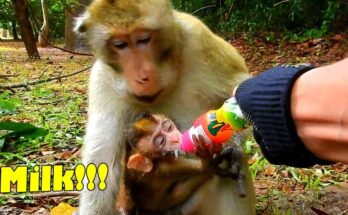
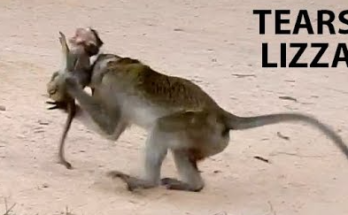
In real life, monkeys often live very close to humans, especially in towns, villages, and cities near forests. Many people see monkeys every day searching for food, playing, or climbing buildings. Sometimes people notice a mother monkey (mum monkey) acting aggressively toward poor, abandoned, or weaker monkeys. This behavior can look shocking or cruel, but there are real reasons behind it.
First, animal behavior is strongly influenced by survival instincts. A mother monkey’s main responsibility is to protect her own baby. If food is scarce, she may push away or act aggressively toward abandoned or unrelated monkeys to make sure her baby survives. This is not done out of cruelty, but because nature often forces animals to make difficult choices.
Second, abandoned monkeys are usually very vulnerable. They may be sick, injured, or separated from their group. Other monkeys, including mothers, may avoid them or act aggressively because illness can spread within the group. In the wild, animals often distance themselves from weak members to protect the larger group.
Human activity also plays a big role. Deforestation, loss of habitat, and feeding monkeys unhealthy food disrupt their natural behavior. When monkeys depend on humans for food, competition increases, leading to stress and aggression. This can cause mothers to react harshly toward other monkeys.
However, hurting monkeys is not acceptable, and humans should not copy or encourage such behavior. Instead, people should support wildlife rescue groups, protect natural habitats, and avoid interfering with wild animals. Abandoned monkeys need help from trained professionals, not punishment.
Understanding animal behavior helps us feel empathy rather than anger. Monkeys, like humans, struggle to survive in a changing world. Protecting them with kindness and responsibility is the best solution for both animals and people.