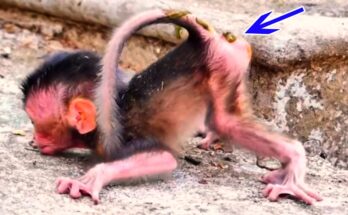
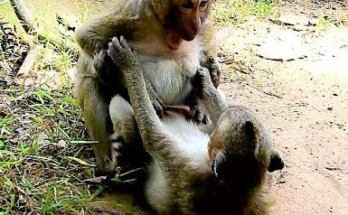
Monkeys live within emotionally intense and highly structured social worlds, where daily life is shaped by alliances, rank, and constant awareness of others. Moments that feel terrifying to human observers often arise when conflicts spread beyond two individuals and pull in allies. A conflict between Jessie and Sherry that results in poor Sherry being attacked by Danna, who steps in to help Jessie, shows how quickly tension can escalate in real-life daily monkey society and how power dynamics determine outcomes.
A typical day in a monkey troop begins calmly at dawn. The group wakes together in trees or other safe resting places, still close from the night. Morning grooming starts early, easing tension and reinforcing bonds. These peaceful routines can give the impression of harmony, but beneath them lies a complex web of relationships. Every monkey knows who they trust, who they avoid, and who stands above or below them in rank.
Jessie and Sherry may already carry unresolved tension from earlier interactions. In monkey society, conflicts rarely appear from nowhere. They grow from small moments: a contested space, a stolen piece of food, a grooming rejection, or a perceived lack of respect. These small events accumulate silently until one spark ignites a confrontation.
As the troop moves into active hours, foraging for fruits, leaves, seeds, and insects, stress naturally increases. Feeding areas are sensitive zones where patience is thin. Jessie and Sherry cross paths again, and body language tightens. Stiff posture, direct staring, or sudden movements signal rising hostility. These are warnings, often unnoticed by younger or emotionally charged monkeys.
When the conflict begins, it is fast and loud. Jessie and Sherry may chase, grab, or scream at each other. Their vocalizations draw attention from the troop. In monkey society, noise is powerful. It can attract help or escalate danger. At this moment, the conflict is no longer private.
Danna’s involvement changes everything. By choosing to help Jessie, Danna turns a one-on-one dispute into a group imbalance. Alliances are critical in monkey life. When one monkey gains backup, the other becomes instantly vulnerable. Power shifts not by size alone, but by numbers and confidence.
Sherry becomes the target. Danna’s attack may be sudden and forceful, involving grabbing, slapping, or biting. To human observers, this is terrifying. Sherry’s cries are loud and desperate, expressing fear, pain, and confusion. The sense of pity is overwhelming because Sherry is now facing two opponents instead of one.
These screams are survival signals. Sherry’s body reacts instinctively, curling inward, covering vital areas, or trying to flee. Panic takes over. Her movements may appear chaotic, but they are driven by a need to escape immediate danger.
Other monkeys respond cautiously. Some freeze, watching closely to understand who holds power. Others move away to protect themselves. Intervening in a group conflict is risky. Only high-ranking or confident individuals may step in, and even then, only if the fight threatens group stability.
Danna’s role as Jessie’s supporter reflects a deep rule in monkey society: alliances matter. Helping an ally strengthens bonds and reinforces shared rank. However, it also increases the severity of aggression toward the opponent. Sherry pays the price for being isolated.
Once the message is delivered, the aggression often stops abruptly. The purpose is not endless violence, but clear communication. Jessie’s position is reinforced through Danna’s support. Sherry’s position is weakened. The conflict’s outcome becomes socially understood by the troop.
Sherry’s suffering does not end immediately. Even after the attack stops, she may continue crying, shaking, or hiding. Her body remains flooded with stress hormones. Fear lingers long after danger has passed. This emotional aftermath is often the hardest part to witness.
As the troop resumes movement, routines slowly return. Monkeys forage, groom, and rest as if nothing happened. This quick return to normal is essential for survival. Lingering chaos would weaken the group and increase risk from predators or rival troops.
Sherry may stay on the edge of the group, avoiding Jessie and Danna. She lowers her posture, avoids eye contact, and moves cautiously. These behaviors signal submission and understanding. Through fear, Sherry is learning how alliances affect safety.
Midday rest provides a chance for recovery. Monkeys retreat to shaded areas and groom one another. Grooming is a powerful healing tool. If Sherry receives grooming from a tolerant adult or peer, it helps calm her nervous system and restore a sense of belonging. Without grooming, emotional recovery takes longer.
Jessie and Danna may sit calmly together, their alliance strengthened. Their relaxed posture signals that the conflict is over. This calm afterward is important. It tells the troop that stability has returned and that further aggression is unnecessary.
As afternoon activity increases, younger monkeys may resume play. Sherry may not join immediately. Her confidence has been shaken. She watches from a distance, learning through observation. This caution is not weakness, but adaptation.
Over time, Sherry may find safer companions or align herself with others to reduce future risk. Monkey society encourages strategic relationships. Isolation is dangerous. The lesson from this conflict may push Sherry to seek new alliances.
Evening brings the troop together again. Grooming becomes more frequent as monkeys prepare to sleep. This period often allows emotional repair. Sitting close, sharing warmth, and hearing familiar sounds help Sherry’s fear gradually fade.
Nighttime is vulnerable, but closeness provides safety. Monkeys sleep huddled together. Sherry may choose a position slightly away from Jessie and Danna, but still within the group. Sleep finally comes, exhaustion replacing panic.
For human observers, scenes like this are deeply upsetting. Watching Sherry attacked because Danna helps Jessie feels unfair and cruel. The instinct to intervene is strong. These emotions reflect human values of fairness and protection.
However, monkey society operates under different rules. Alliances are survival tools. Helping a friend is not optional; it is expected. Sherry’s pain is real, but so is the logic behind Danna’s action.
Understanding this context does not remove the pity we feel for Sherry. Her fear, screams, and vulnerability deserve compassion. But it helps explain why such terrifying moments occur and why they resolve the way they do.
In the days that follow, the troop continues. Sherry adapts, Jessie’s status is reinforced, and Danna’s loyalty is recognized. The conflict becomes part of the troop’s shared memory, shaping future interactions.
The daily lives of monkeys are not gentle stories. They are real stories of survival in a crowded social world. Conflict, alliance, suffering, and recovery exist side by side. Terrifying moments reveal the strength and danger of social bonds.
In the end, real-life daily monkeys teach us that belonging can protect, but isolation can be devastating. Sherry’s attack is a painful reminder of how alliances shape fate. Through fear and learning, the troop restores balance, and life moves on, carrying the weight of what happened into the quiet rhythm of another day.