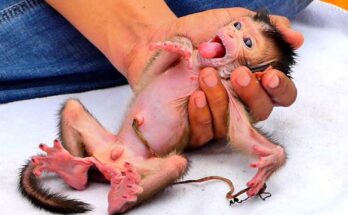
Daily life among monkeys can look playful and familiar to humans, yet it is shaped by complex social rules, survival pressures, and emotional dynamics that are often misunderstood. In forests, riverbanks, and even human-adjacent environments, monkeys spend their days foraging, grooming, caring for young, and negotiating social rank. What appears to be simple behavior is usually driven by deep biological instincts and learned social patterns. Observing their daily lives reminds us that monkeys, like humans, live in societies filled with cooperation, conflict, affection, and tension.
Most monkey groups are structured around a clear hierarchy. Adult females often form the stable core of the group, while males may move in and out depending on the species. Daily routines begin early, with monkeys waking at dawn to search for food. Fruits, leaves, insects, and seeds make up much of their diet, and finding these resources requires memory, communication, and teamwork. Younger monkeys learn by watching elders, imitating how to peel fruit, crack shells, or avoid dangerous areas. These ordinary moments define the rhythm of monkey life.
Grooming is one of the most important daily activities. It is not just about cleanliness; it strengthens social bonds and reinforces rank. A lower-ranking monkey may groom a higher-ranking one as a sign of respect, while close companions groom each other to maintain trust. Mothers groom their infants frequently, creating strong emotional ties that help babies feel secure. Through grooming, monkeys reduce stress, settle disputes, and keep their group functioning smoothly.
However, daily life is not always peaceful. Competition for food, mates, and social status can lead to aggression. Conflicts may involve chasing, biting, or loud vocalizations meant to intimidate rivals. These confrontations usually stop before serious injury occurs, because maintaining group stability is essential for survival. Still, tension is a constant undercurrent in monkey societies, especially in crowded environments or areas where food is scarce.
Occasionally, behavior that appears shocking to human observers can occur, particularly involving infants. In some species, infant aggression, rejection, or even infanticide has been documented. This does not mean that monkeys are cruel in a human moral sense. Such actions are often linked to stress, dominance struggles, hormonal changes, or competition. A female monkey that appears to “hate” a baby may actually be responding to social pressure, lack of resources, or threats to her own offspring’s survival.
For example, when a female named Amari takes a baby monkey like Polly, tears objects, or throws them into the water nearby, observers may interpret this as deliberate malice. In reality, such behavior may be displaced aggression. The female may be frustrated or threatened and redirect her energy toward an object or a weaker individual. Throwing items into water or engaging in rough handling can be a sign of emotional overload rather than intentional harm. Monkeys, like humans, do not always manage stress in healthy ways.
Baby monkeys are especially vulnerable within the social structure. Their safety depends largely on their mother’s rank and the protection she can offer. High-ranking females often receive support from relatives, while low-ranking mothers may struggle to keep their infants safe. In some cases, other females may harass or reject a baby to assert dominance or reduce competition. This harsh reality reflects the constant balancing act between cooperation and rivalry in monkey societies.
Environmental factors also play a major role in shaping daily behavior. Monkeys living near human settlements face additional stress from noise, pollution, and limited natural food sources. These pressures can increase aggression and abnormal behavior. When monkeys are filmed or closely observed by humans, their actions may become more erratic due to fear or overstimulation. What looks like senseless aggression may actually be a response to an unnatural and stressful environment.
Despite these darker moments, daily life for monkeys also includes play, curiosity, and affection. Young monkeys chase each other, wrestle, and swing from branches, developing physical skills and social awareness. Mothers cradle their infants, carry them for months, and respond to their cries with remarkable sensitivity. Even unrelated adults may show gentle behavior toward babies during calm periods. These tender moments are just as real as the conflicts and deserve equal attention.
Understanding monkey behavior requires stepping away from human judgments and looking at the ecological and social context. Monkeys do not act out of hatred in the way humans define it. Their actions are shaped by instinct, experience, and immediate survival needs. By studying their daily lives carefully, researchers and observers can better understand how stress, hierarchy, and environment influence behavior, including aggression toward infants.
In the end, real-life daily monkeys live complex lives filled with routines, relationships, and challenges. Scenes that appear cruel or shocking are often the result of invisible pressures rather than inherent evil. Recognizing this helps promote more compassionate and informed views of wildlife. When humans learn to respect monkey societies and reduce the stresses we impose on them, we create the possibility for more balanced interactions and a deeper appreciation of these intelligent and emotionally rich animals.