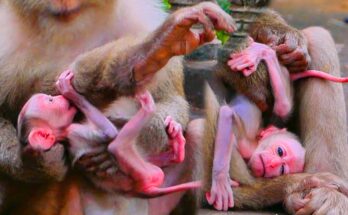
Every day in real life, monkeys live freely around the Bayon area, especially near the Bayon Temple in Angkor, Cambodia. These monkeys are an important part of the local environment and are familiar to both tourists and local people. Early in the morning, the monkeys wake up and move through the trees and ancient stone ruins, searching for food. They often travel in groups, jumping from walls to trees and climbing on the temple structures with great energy and confidence.
During the day, the monkeys spend time eating fruits, leaves, and food they find on the ground. Sometimes, they also take food from visitors who are not careful with their bags. This is why signs are placed around the Bayon area to remind tourists to protect their belongings and not feed the monkeys. Even though they look playful and cute, the monkeys are wild animals and can become aggressive if they feel threatened.
As tourists walk around the Bayon Temple to admire the famous stone faces and carvings, monkeys can be seen sitting on statues, resting in the shade, or grooming each other. Their daily travel around the Bayon area shows how closely nature and history are connected in this place. The monkeys use the ancient temples as part of their natural home, moving easily through spaces built hundreds of years ago.
In the afternoon, the monkeys become calmer as the weather gets hotter. They rest together and watch people pass by. When evening comes, they slowly return to the trees to sleep. The daily life of monkeys at the Bayon area is a unique experience that shows the harmony between wildlife, culture, and history, making every visit memorable and lively.