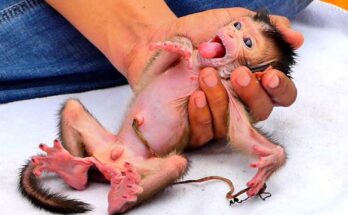
In the flow of real-life daily monkey life, not every moment is joyful or easy. On this day, attention was drawn to a newborn baby monkey, just born and still adjusting to the world around it. The forest was calm, but the mood felt fragile. The tiny newborn lay close to the ground, its movements slow and unsteady, still learning how to stretch, cling, and breathe in rhythm with its surroundings. Nearby, the mother, Leyla, moved a short distance away, leaving the baby alone for a brief but worrying period.
Newborn monkeys depend completely on their mothers in the first days of life. Warmth, protection, and milk are essential for survival. Leyla’s decision to move away was not cruel or careless, but it was concerning to witness. In real monkey life, mothers may step away due to exhaustion, stress, lack of experience, or disturbance in the environment. Leyla appeared restless, glancing back occasionally, her body torn between instinct to care and the pressure of her surroundings.
The baby remained where it was born, small and quiet, making soft sounds that showed need rather than fear. These sounds were natural signals, meant to guide the mother back. Hunger was evident, as milk is the newborn’s only source of nourishment and comfort. Without it, even short separations can feel long and uncertain. The baby’s tiny body shifted slightly, searching for warmth, curling in on itself to conserve energy.
Around them, the troop continued its daily routine. Some monkeys moved through the trees, others groomed or searched for food. Life does not stop for one moment of struggle, even when that moment feels heavy. A few monkeys noticed the newborn but did not approach closely. In monkey society, newborn care is usually the responsibility of the mother, especially in the earliest stage. Intervention from others is rare unless there is a strong social bond or extreme danger.
Leyla’s absence created a quiet tension. She did not go far, but the distance mattered. She climbed onto a low branch, paused, and looked back. Her body language suggested uncertainty rather than abandonment. First-time or stressed mothers sometimes struggle immediately after birth. Hormones, fatigue, and environmental pressures can interrupt natural bonding, even though the instinct to care remains.
The newborn continued to wait, its movements weak but persistent. Hunger is one of the strongest sensations a newborn experiences. Milk is not only food but also reassurance, signaling safety and connection. Without it, the baby’s calls became slightly more frequent, though still soft. These gentle cries carried through the air, a quiet request rather than a loud alarm.
After some time, Leyla began to move back. Her steps were slow and cautious. She approached, stopped again, and watched her baby closely. This hesitation showed the complexity of animal behavior—care is not always immediate or perfect. When she finally came close, she reached out and touched the newborn lightly. The baby responded instantly, shifting toward her, recognizing her presence.
Leyla settled beside the newborn, and the tension eased. The baby pressed closer, seeking milk and warmth. This reunion, though simple, felt powerful. It showed how quickly situations can change in daily monkey life, moving from worry to relief without drama. The mother’s return restored balance, even if the moment of separation had been difficult.
This scene highlighted the vulnerability of newborn monkeys and the challenges mothers face. Life in the wild or semi-wild environment is demanding. Mothers must balance their own survival with the needs of their babies, often under pressure from weather, food availability, and social dynamics. Leyla’s brief absence did not define her as uncaring; instead, it reflected the reality that motherhood in nature is complex and sometimes overwhelming.
As the day continued, Leyla stayed closer to her baby. The newborn, now calmer, rested against her, drawing strength from contact and nourishment. The troop moved on, and the forest returned to its usual sounds. What remained was the quiet understanding that daily monkey life includes moments of pity, worry, and hope. This newborn’s fragile beginning served as a reminder of how delicate life can be—and how powerful even a small act of return can be in shaping survival.