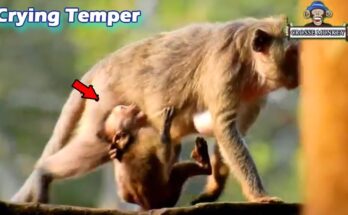
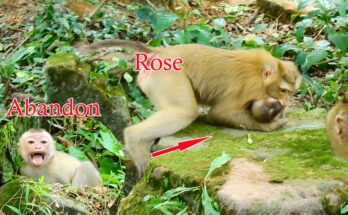
The old video titled “Sorry, I Cannot Control My Laughing to See Big Baby Julina Angry & Crying Drama Requesting Milk” is both humorous and relatable, showing a young monkey expressing frustration in a very human-like way. While viewers may find it funny, Julina’s behavior reflects real-life challenges in monkey development and social interactions.
In the wild, infant and juvenile monkeys rely on their mothers for nourishment, comfort, and guidance. As they grow, mothers gradually reduce nursing, encouraging independence. During this weaning period, it is common for young monkeys to protest by crying, showing frustration, or attempting to cling to their mothers. These “dramatic” behaviors are not manipulative—they are natural expressions of need and emotion, helping the infant communicate with caregivers.
Daily monkey life involves much more than feeding. Young monkeys spend hours playing, exploring, learning social rules, and observing older troop members. They engage in gentle tussles, chase games, and other interactions that teach coordination, problem-solving, and group dynamics. Mothers and other adult monkeys closely monitor their young, guiding them while allowing them to learn from small mistakes or conflicts.
Videos like this resonate because they highlight both the emotional depth and playful intelligence of monkeys. They remind viewers that growing up in a monkey troop is a mix of learning, frustration, humor, and strong family bonds.