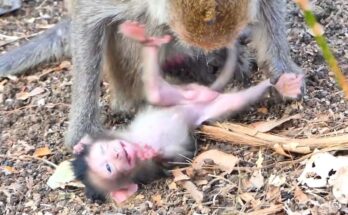
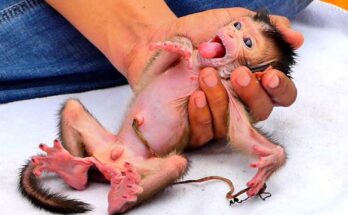
Life for a newborn monkey in the wild is both magical and challenging. From the moment they are born, baby monkeys are completely dependent on their mothers for survival. Every day is a mix of exploration, learning, and learning limits. Tiny hands cling tightly to their mother’s fur as she moves through the trees, teaching them how to navigate the complex and sometimes dangerous world around them. Their wide eyes take in every sound, shadow, and movement, slowly learning which actions are safe and which are not.
Mother monkeys are loving but strict teachers. They need their babies to survive in a world full of dangers, from predators to harsh weather. Sometimes, this means a gentle warning or even a quick slap when the baby tries something dangerous, like wandering too far or grabbing at the wrong branch. To an outsider, this may seem harsh, but it is the mother’s way of protecting her little one. The baby soon learns to understand these warnings, associating them with safety and guidance rather than punishment. Even in these moments of strictness, the bond between mother and baby grows stronger, and the little one feels secure knowing someone is watching over them.
The daily routine of a newborn monkey is full of small lessons. The morning often starts with feeding, usually clinging to their mother for warmth and nourishment. Their tiny fingers hold onto fur, learning the sense of touch and security. After feeding, the mother guides the baby through basic survival skills, like climbing, balancing, and jumping between branches. These activities may look playful or clumsy, but they are critical for developing strength, coordination, and confidence. Each jump and swing is a step toward independence, even if the mother is always nearby to correct mistakes or offer warnings.
Play is another essential part of a baby monkey’s life. Between lessons from their mother, they explore their surroundings with curiosity. They chase shadows, hop on leaves, or imitate the movements of older monkeys in the troop. These playful moments are not only fun; they are also opportunities to practice essential survival skills. Observing others teaches them social cues, communication, and how to react to threats. Even small squeaks, giggles, or squeals are part of learning how to interact and survive in the wild.
As the day goes on, the baby monkey faces challenges that test both its courage and the mother’s patience. If the baby strays too close to a branch that looks unsafe or tries to play too roughly, the mother may give a loud warning call or a quick slap. This behavior, though startling, is a form of guidance. The baby quickly understands the lesson: some actions are too risky, and it must pay attention to survive. These small corrections are a vital part of growing up, helping the baby understand boundaries and the dangers of the world.
Social interaction is another key part of a baby monkey’s daily life. Even while under the watchful eye of the mother, the little one observes other monkeys, learning how to communicate, cooperate, and even compete. Older monkeys may show curiosity, sometimes gently nudging the baby or teaching it small lessons. These interactions are important for mental development, helping the baby understand the complex social dynamics of monkey society. Over time, these experiences build confidence, resilience, and emotional intelligence, which will be essential for adulthood.
Evenings are a time for rest and bonding. The baby curls up against the mother, exhausted from a day full of lessons and play. The mother keeps a protective watch, ensuring the little one is safe from predators or sudden dangers. Despite the strict lessons and warnings throughout the day, these quiet moments of warmth and closeness remind the baby that it is loved and protected. The tiny monkey drifts off to sleep, ready to face another day full of learning, exploration, and growth.
Watching the daily life of a newborn monkey is both heartwarming and inspiring. Their struggle to learn, adapt, and survive under the careful guidance of their mothers shows the delicate balance of love, discipline, and resilience in the wild. Even when faced with strict warnings or a playful slap, the baby continues to explore, climb, and grow stronger each day. Their journey is a powerful reminder of the determination and adaptability of life in the natural world, and the incredible bond between mother and child that ensures survival against all odds.